
Is Stevia Better for You Than Sugar? A Simple Guide
Be honest. That second spoon of sugar in your chai is often more about habit than taste. And lately, you may have heard that stevia is a better alternative. But is stevia better for you than sugar?
Let’s keep it simple. In this guide, we will explore what stevia is, how it compares with sugar, its nutritional value, potential benefits and who should take extra care. No complicated science, just practical information for everyday choices.
If you want to reduce added sugar, a zero calorie sweetener such as purified stevia extract may help you sweeten your favourite drinks without adding sugar from the sweetener itself.
What Is Stevia?
Stevia is a plant-based sweetener derived from the leaves of Stevia rebaudiana, a plant native to South America. Its leaves contain naturally occurring compounds called steviol glycosides, which provide an intense sweet taste.
These compounds can be around 200 to 300 times sweeter than regular sugar. This means only a small amount is needed to achieve a similar level of sweetness.
Commercial products usually contain purified extracts available as powders, drops or tablets. Dried stevia leaves can also be used to sweeten tea.
Although it originates from a plant, purified stevia extract is processed to separate and concentrate its sweet compounds. Always check the product label, as some tabletop sweeteners contain additional ingredients.
Stevia vs Sugar: What Is the Difference?
Both options can make your drinks taste sweet, but their nutritional properties differ.
| Feature | Regular sugar | Pure stevia extract |
|---|---|---|
| Source | Sugar cane or sugar beet | Stevia plant leaves |
| Calories | About 16 per teaspoon | Zero calories |
| Sweetness | Standard sweetness | Much sweeter than sugar |
| Blood glucose | Raises blood glucose | Generally has little direct effect |
| Dental health | Frequent sugar exposure contributes to tooth decay | Does not provide the same fermentable sugar to cavity-causing bacteria |
| Everyday use | Drinks, desserts and baking | Tea, coffee and other drinks |
Which Is a Better Sugar Replacement?
If your goal is to reduce sugar and the calories it adds, purified stevia extract can be a useful alternative. It works particularly well in everyday drinks such as chai and coffee.
However, sugar is not something you must eliminate completely to eat well. What matters is your overall eating pattern and how much added or free sugar you consume.
The World Health Organization recommends keeping free sugars below 10% of total daily energy intake, with further benefits possible at below 5%. Read the WHO guideline on sugars intake for more information.
Stevia Nutrition Facts
Pure stevia extract contributes virtually no calories, carbohydrates or sugar in the amounts typically used to sweeten a drink.
For pure extract, the nutritional contribution is generally:
- Calories: 0
- Carbohydrates: 0 g
- Sugar: 0 g
- Fat: 0 g
- Protein: 0 g
These figures refer to pure extract, not every product sold as a stevia sweetener. Some blended powders and tablets contain ingredients such as dextrose or maltodextrin, which may contribute calories or carbohydrates.
Check the nutrition label and ingredient list before choosing a product.
Stevia Plant Benefits: What Should You Know?
The main practical advantage of using purified stevia extract is that it can provide sweetness without the calories and sugar contributed by regular sugar.
Here are a few points to consider:
- Zero-calorie sweetness: Replacing sugar in your tea or coffee can reduce the calories contributed by the sweetener.
- Blood glucose considerations: Pure stevia extract generally has little direct effect on blood glucose compared with sugar.
- Dental health: It does not provide the fermentable sugar that cavity-causing bacteria use.
- Plant-derived origin: It is made from compounds extracted from the leaves of a plant.
- Suitable for hot drinks: It can be used in hot tea and coffee.
- Small quantities are enough: Its intense sweetness means you generally need much less than sugar.
Remember that these benefits depend on what you replace. Adding a sweetener without reducing your usual sugar intake may not deliver the same benefit.
The WHO’s 2023 guideline on non-sugar sweeteners advises against relying on these sweeteners as a long-term strategy for weight control or reducing disease risk. The recommendation is not a safety assessment of individual sweeteners and excludes people with pre-existing diabetes. A balanced diet and less dependence on very sweet foods remain important.
Is Stevia Safe for Everyone?
Purified steviol glycosides that meet applicable food safety standards are considered safe within established acceptable intake limits. However, individual circumstances and the ingredients in a particular product matter.
Consider speaking with a healthcare professional before making dietary changes if you:
- Have diabetes or take medicines that affect blood glucose.
- Take blood pressure medication or have concerns about low blood pressure.
- Are pregnant or breastfeeding and have questions about sweetener use.
Some people notice an aftertaste. Digestive discomfort may also occur with certain blended sweeteners, depending on their additional ingredients.
Read the product label, follow the recommended serving size and seek professional advice if you have concerns.
Easy Ways to Enjoy Less Sugar Every Day
Making a change does not have to mean giving up your favourite flavours. Try these simple habits:
- Start with small changes. Gradually reduce the amount of sugar in your daily drinks.
- Check ingredient labels. Look for unnecessary added sugars and understand what is included in blended sweeteners.
- Try different drinks. Tea, coffee, lemon water and smoothies can be adjusted to your taste preferences.
- Give your taste buds time. Gradually getting used to less sweetness can help you change your everyday habits.
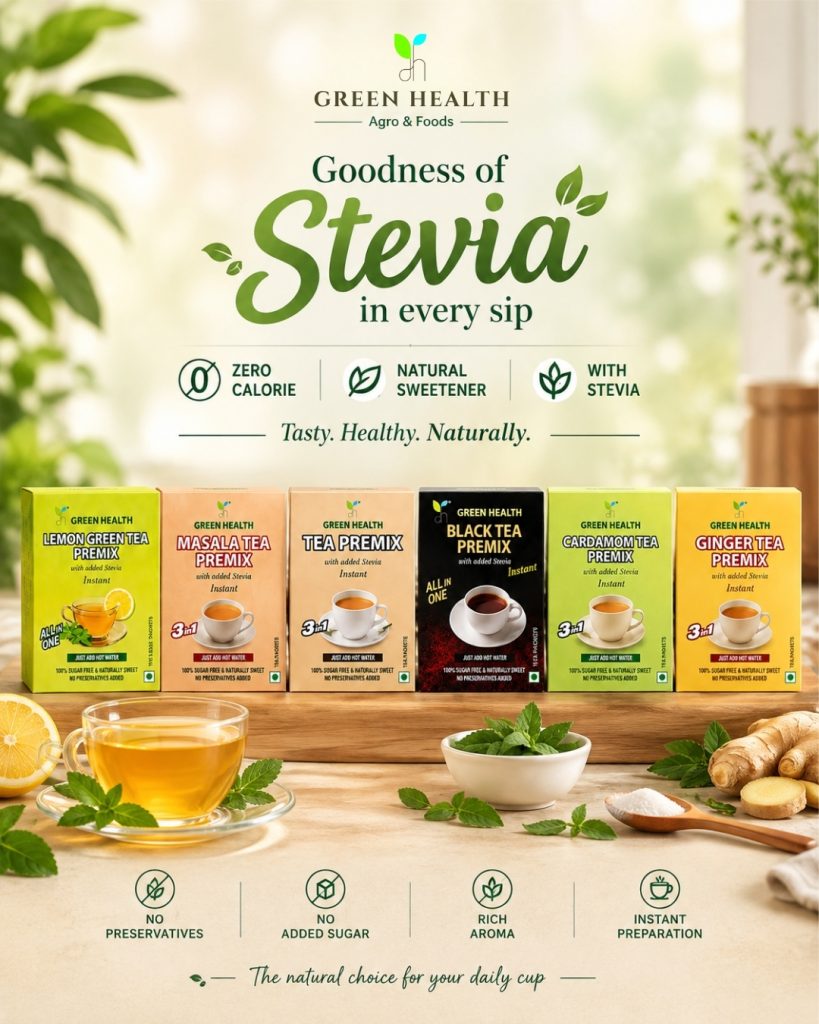
At Green Health Agro and Foods, our instant tea and coffee premixes are made with stevia to offer convenient sweetness without adding refined sugar as a sweetener. Choose from masala tea, ginger tea, cardamom tea, black tea, lemon green tea and a range of coffee options.
Simply prepare your drink according to the pack instructions and enjoy a convenient cup in minutes.
Frequently Asked Questions
Is stevia better for you than sugar?
It can be a useful option if you want to reduce the calories and sugar contributed by sweetening your drinks. The overall benefit depends on your diet, the product you choose and whether it replaces sugar.
Is stevia good for health?
Purified stevia extract can help reduce sugar intake when used as a replacement. It is a sweetener, not a source of essential nutrients, and should not be treated as a health remedy.
What is stevia made from?
It is made from sweet compounds extracted and purified from the leaves of the Stevia rebaudiana plant.
Will stevia raise blood sugar?
Pure stevia extract generally has little direct effect on blood glucose. Other ingredients in a blended product may affect its nutritional profile. People with diabetes should seek individual medical advice.
Does stevia have calories?
Pure stevia extract contributes virtually no calories at typical serving amounts. Blended products may contain calorie-contributing ingredients, so check the label.
Is stevia safe during pregnancy?
If you are pregnant or breastfeeding, ask your healthcare professional about the suitability of a particular sweetener and the amount you plan to consume.
Conclusion: Making a More Mindful Sweet Choice
If you enjoy sweet tea or coffee but want to reduce your sugar intake, purified stevia extract may be a practical alternative. Regular sugar can still fit into an overall balanced diet, provided you pay attention to the amount you consume.
The goal is not to find a magic ingredient. It is to build everyday habits that work for you, one small change at a time.
Ready to try a convenient alternative? Explore Green Health stevia tea premixes and discover tea options made for quick, easy preparation.